Tuesday, 30 July 2013

The parable of The Simpsons, series 4, episode 12

Well the weather broke and we have experienced some incredibly intense showers with gutters struggling to cope and water running down the sides of the lane, but the river has hardly responded bar a generally fresher feel and a tinge of colour. This past week has seen two of the biggest fish of the year put on the bank, the first a fish of four pound, was taken on the surface in the middle of the afternoon with the mercury moving well past the thirty mark. The second a fish of six pound was taken on a Caddis nymph around lunch time, both fish had been in the river at least two years or more and were in superb condition, it’s surprising that they made their mistake in the middle of the day having got their eye in over a few seasons, the cricketing equivalent of slapping a full toss to midwicket when well into three figures.
The river is stuffed with minnows, the shallow streams through the garden the deep glides on the bends, the shallows in front of the hut all play host to thousands of the things. The Kingfishers nesting at the top of the river are filling their boots and the young are now fledged and feeding hard on a menu of minnows, although a pond full of silver fish fry provides an alternative meal.
The Millstream is now shut off with all water pushing down the main river to maintain a decent flow, heavily weeded in its lower stretches it sits like a pond but still plays host to fish and quite a few duck have taken advantage of its thick fringe that will now be left for the remainder of the season.
Over on the Itchen an Otter has been about, the signs are there in the fringe along with a few half eaten fish on the bank and tell tale spraints, there are also several broods of Pheasant who occasionally break cover from thick fen to scamper along the cut paths, particularly if I am approaching with my strimmer. Now that the Orchids have finished I am setting about topping the water meadows, a few weeks later than normal which means it is a steady old job.

Oh frack it!

Most of my mental energy is consumed by all things shale gas at the moment. Questions on the phone, emails offering text for perusal, even a call from TV for a quote. The Government (who I did vote for, so it’s my own fault) have gone into overdrive with the pro fracking message, the country will slip back into recession if we do not frack and everyone who signs up can have free lollipops and oodles of cash, have we forgotten the parable of the Simpsons, season four episode 12, and how long before some local government splurges the fracking bunce on a monorail?

Picture the scene:

A nuclear family of Mum, Dad and two point four children sit down for tea in the middle of the week, on two point four chairs to eat four point four pork chops, with vegetables various and some bisto gravy.

Dad: Sit still son, and stop wobbling the table

Child A: it’s not me Dad it’s my sister.

Child B: Not me, we did deportment at school today, I is still!

Dad: You may have done deportment but your grammar isn’t the best, I am still

Child B: Whatever,

Dad: It must be you 0.4, can you sit still please?

Child 0.4: I’m doing my best, but I’ve barely got two legs on this 0.4 of a chair so it’s going to wobble a bit

Mum: You silly beggars, it’ll be them frackers, now eat your chops, we’re going on the monorail later.

Anyone who protests is an ideological extremist, but the line peddled by oil companies and government is almost as extreme.

The answer, must lie somewhere on middle ground, Professional protestors in Prada bring nothing to the party, and neither does the government line that fracking is the panacea to all energy problems and let the lights shine forever. Shale gas may have helped turn the American economy around but they have a little more space and water than we do and the impact will not be felt as acutely as over here. There is a price to pay for the extraction of shale gas, an environmental trade off that few on high will acknowledge. Fracking on this crowded island is a far riskier operation, particularly with regard to precious groundwater supply and environmental impact, the seismic activity I could live with, anytime the earth moves at this stage of life is a welcome event.

Currently we are all being urged to “think of the money” and how posh our plasmas could be when we start pulling gas out from the shale but just over a year ago this corner of England was in a drought, there was not enough water to go around, and we were all warned that the situation was only likely to get worse in the decades to come,particularly in the south east so start using your water wisely.

Fracking is a thirsty business and water abstracted for fracking is, for those interested in the bottom line, the equivalent of living off your capital. It’s withdrawn from the ground, spent on fracking and that’s it gone; waste water that cannot be treated or returned from whence it came, so the rivers and all that live in them miss out. Just over a year ago this river was down to its bare bones (these photos were taken in April 2012) it was rescued by record summer rainfall, if that record rainfall had not fallen and Frackers were fracking freely in this valley pulling water from the ground, we would have been hosting a TV programme titled “Fish rescue”

I have written to my local MP expressing concern over the source of water plus a few others with interests in fishing. To date only one has replied. The others, all in government (that I voted for, I know, I know) have, a month or more later, yet to reply: But then why should they respond to the ravings of an addled crank worried about the river upon which he works?
.
Two years ago, water supply to the South East of England was a key issue; we were all encouraged to become more water wise. The extraction of shale gas is not water wise, if we are to waste water in this way, the H2O needs to be sourced from somewhere where it is abundant, and then a little thought given as to where it is disposed off, because where the aquatic environment is concerned it is not the most agreeable liquid.

Constant banging on about the possible economic benefits of fracking with a disregard to all else may be symptomatic of the times in which we live, but twenty years down the line, those in the south who took the fracker’s salt may be bemoaning the fact that the unit price of the water in their kettle surpasses the cost of warming the stuff up, and why does the river no longer run at the bottom of the garden?

How about a little transparency over who has a portfolio full of fracking shares?

Sunday, 21 July 2013

David Gower to host Strictly

Well, where did the river go? I have a vague memory that a few years ago I expressed concern over the speed at which the river level fell following a reasonable winter of rain. It’s happening again, conditions may have been exceptional over the past fortnight with sticky heat and high temperatures, but while carrying out the July weedcut it is apparent that the river is hardly pushing through at all. There is still a taint to the water which is frustrating, although over on the Itchen the water has cleared for the first time this season.
Day time fishing has become particularly fruitless although one fish of four pound that had been skulking on a bend for a few years went silly in the sun and snatched at Klinkhammer at the hottest part of the day. Most activity occurs in the last hour of the day with fish abandoning the bottom of the river to slash at sedges. There are currently some very large grayling laying low on some of the bends, large for this river is two pound plus, and I am confident that several will be caught when we start sub surface fishing at the end of the month. There are also grayling fry on the shallows by the ford in the millstream which is a popular site for “the lady of the stream” to kick up her redd if a little hazardous in the traffic. Fewer shoals of roach are in evidence, although there are some large solitary fish well in excess of two pound, that are immaculate and unmarked. Hatches of fly in the past few weeks have been fairly good, Olives and BWO if not pour of the water, hatch regularly and the evening has seen some reasonable falls of spinners. There seem to be plenty of duck about, when the river is falling it pays not to be too tidy with the fringe and the marginal growth, allowing it to creep out into the river squeezes what flow remains and keeps the weed and gravel in reasonable order and reduces the settling of suspended solids, the ducks have enjoyed this extra cover, plus a Waterrail that flushed from cover on the middle bends when Otis’s made investigations as to the identity of the bird that his nose had betrayed. Away from the river, we have never had a year like it for butterflies and bees, reports in the press suggest that they are having a hard time of it of late, but that is certainly not the case around here. The water meadows that I would normally top in late June have been left a little longer because the orchids were late to put in an appearance, a few strides through the long grass shifts a plethora of butterflies while the bees buzz contentedly on the verdant fen that is now a riot of colour. I will have to top the meadows in a few weeks once the orchid seed has set, but the fringe will be in full flower by then and Loostrife, monkey flower and much more besides will provide an equal attraction.

Disaster occurred on the Kennet recently when organo phosphates leaked into the stream and did for most of the invertebrates in ten miles of the stream, the use of the particular organo phosphate is banned in many countries, an appalling incident occurred in India recently where school dinners were cooked in mustard oil contaminated with such chemicals wiping out an entire class. Anglers have been advised to wash their hands and not consume any of their catch, all that feed on aquatic invertebrates, mostly fish and birds, will go hungry for quite some while and the aquatic environment will be impacted upon. The pollution incident came to light, not through government agency testing, but through Invertebrate “kick sampling” by interested angling bodies on the river. A long, long time ago when I was a hungry student on the middle river, one of our regular stocking trips was to Frensham Fly Fishers on the River Wey. Always on a Saturday morning, many members would turn out to assist with the stocking, before taking us to the pub on the green for a ploughmans and pint (a welcome meal for a starving student) where I would earwig the headkeeper for who I worked, in discussion with Dr Cyril Bennet, Frensham Fly fishing club member who expressed concern over the decline of the Blue Winged Olive. Dr Bennet went on to develop a method of assessing aquatic invertebrate populations by means of a simple and inexpensive kick sample. A few minutes of shuffling around in the river with a fine net followed by a visual assessment of beasties caught and in what numbers. Dr Bennet and his team secured funding for equipment to be given to interested parties, encouragement was given by Governement Agencies and for many years Dr Bennet and his gang held workshops to demonstrate the technique and dish out free sampling equipment. I attended a refresher course with Dr Bennet a few years ago and briefly shared a petri dish with Jeremey Paxman which was a bit of a worry at the end when questions were called for.
The serious pollution incident on the Kennet came to light through the kick sampling developed by Dr Bennet and his team. Gammarus Pulex, the freshwater shrimp, are the first to cash in their chips should anything nasty enter the waterway, a typical kick sample on a chalkstream will turn over hundreds of the wee beasties, an angler who fished here a few days ago, carried out one of the kick samples that raised the alarm, his sample showed one groggy Gammarus. Once the alarm was raised Government agencies acted fast, and the publicity machine moved into action, with furrowed brows very much to the fore when “action” was called, but without Dr Bennet’s kick sampling, this “invisible pollution” event may have gone unnoticed. I don’t know the fella, I was just the lad on the trailer netting out the fish years ago, but Dr Bennet received a thoroughly deserved MBE in the Queen’s Birthday honours list.

left to the Blue Winged Olives, they’d have made him a Saint.

The Angling Trust, an independant body formed to take cohesive action on behalf of all forms of angling , achieved considerable success following pressure put on command centre central to address the burgeoning population of inland cormorants. Flying in the face of an IFM report that suggested that cormorants were ok, the Angling Trust have secured a catchment by catchment deal that will asses local populations of cormorants and issue predator licences accordingly, a sensible modification to the current beaurocatic licensing system. If you are not a member, get on and join. The Angling Trust are doing good things.

The future of lights and power is fracking, the message is writ large everyday by loons in power who have been sold the story of a friendly source of gas. Those who object are deemed idealogical weird beards and yurt dwellers. Myself, a seething mass of testosterone, who laughs in the face of tofu and granola, want to know where the water is coming from because it will impact on the river that I have looked after for lots of my life. I can take the seismic activity, at this age it may provide a welcome jump start, but am uneasy by the oily sales pitch from on high that promises hundreds of thousands of pounds to local communities who agree to frack. Today for the first time, concern was raised in the papers about the sourcing and disposal of water in the south east, I am too modest to say...

ok I’m not

here’s the link

http://www.telegraph.co.uk/finance/newsbysector/utilities/10189331/Water-firms-raise-fears-over-shale-gas-fracking.html


you heard it here first, an unlikely alliance with the water companies, but if it helps preserve this river I’d do the spoons with Genghis Khan.

With Child B occasionally in residence, cricket still takes up a large part of our life, a recent Sunday friendly in the Bourne Valley featured an unjust early dismissal for yours truly resulting in a tour of a nearby lake, eutrophic and spewing its guts into the precious river below, which didn’t ease my mood. Above the outfall of the nutrient rich lake where hundreds of ducks and geese are fed daily by joe public, the river ran clear, below the outfall filamentous algae abound. It’s a no brainer, online lakes in the upper reaches of this river system need proper management plans to prevent their impacting on the river below.

Cricket again, Andrew Strauss is causing concern in this household, his summary during play is the equivalent of “Say what you see” Alan Shearer on Match of the Day, I have mushrooms in the fridge that could pass more pertinent comment, and recent ramblings by David Gower suggest that he has entered a delicious period of later life enlightenment. He may be the president of our cricket club, but I am not required to put a positive spin on all that he utters. Recently he has suggested that all raised in town be given countryside classes and vin rouge prescribed free on the NHS,

Hear, hear says I, (and not because he is El Presidente)

A louche Peter West?

what price David Gower the next host of Strictly Come Dancing albeit with the lights turned low and the show screened after eleven?

A plea:

This column is soon to start a petition to force supermarkets to introduce a dress code during hot weather, It is beyond belief what the cream of local town society deem suitable attire for the purchase of frozen peas on a hot saturday morning.

Please show the petition your support

Monday, 1 July 2013

A mobility scooter ride to Eutrophia

For the purposes of maintaining an acceptable pressure of blood and all things anger management I have put off chucking this piece of rubbish together for forty eight hours, in the hope that the vein on the side of my forehead would not start to pulse three paragraphs in. But first, here’s Bob with the weather.

A dry week and fishing has toughened up a touch but not to the degree that we have experienced post mayfly for some years, the odd fish will still snap at a mayfly but most have been taken on olive patterns at all times of the day, there are a few sedge about and there are fewer fish in the book with DDL written next to their name than recent seasons past. Water colour was an issue a few days after the weed cut ended, and the river still maintains a milky hue. Many have commented on it but no one has a definitive reason other than it was a heavy weed cut. On this river spring ditches that had remained dry for over two and a half years collected organic crud that was washed into the river during last winter’s flows. It may be that some of this material lay beneath weed that has now been cut and the crud is exposed to the flow. As weed grows and also when it is cut, water is pushed into areas where it wouldn’t normally flow where sediment and organic matter may have collected.

It’s just a guess,

A painful experience was averted earlier this week, while whirling around with my strimmer, plugged into appropriate music to maintain my rate of work, I inadvertently barged into a swarm of bees, a passive bunch they had massed on a branch of an apple tree and didn’t seem to mind my buzzing about them. I haven’t seen one here for a few years and normally you hear them before you see them but this lot were quiet and content and hung around for a couple of hours before pushing off..

In a further attempt to stave off my pulsing vein, I am writing this while watching a pleasant Sunday game of village cricket in bright sunshine and a gentle zephyr, flying above are a pair of Kites. Most cricket grounds in the Hampshire league currently play host to a Kite or two, they are becoming as much a part of match day as bats, bails and tea, their reintroduction over a decade ago has certainly proved successful, an electrician who fiddled with our fuse box two years back and is housed near the site of the original release said he looked skyward while picking some beans one summer and counted eleven in the air.

And that’s it, the vein is starting to pulse and I can put it off no more.

Earlier this week I was required to spend several hours mixing with the cream of town society while a man with oil on his hands and golden spanners set fire to many of my twenty pound notes in an attempt to fix our car. Wandering the high street I mused on the need for so many coffee shops and mobile phone emporia, and why do we have three mobility scooter hire shops in the Shopping centre? a Para Olympic legacy, or a direct result of the high st McDonalds closing down and moving to a "drive through" operation on the edge of town. I know for some the acquisition of their first mobility scooter can be a life changing moment, and provides valuable independence and freedom. But some people in this town are now using them as a recreational vehicle. Driving into town, parking the car and if the second “all day breakfast" is sitting a bit heavy then lets hire a mobility scooter at £3.50 an hour to tootle about town. Are we turning into a generation of daleks?

Fed up with the unsatisfactory retail experience on the high st, I wandered out of town pausing briefly to furnish the oily handed one with a fresh pile of twenty pound notes with which to stoke his fire. On the outskirts of town is a nature reserve. Previously a put and take trout fishery with small fish farm it was purchased by the borough in order that the town’s population should receive an environmental experience. There are a few hundred yards of river which has had much work carried out on it, with woody debris very much to the fore and a plethora of signs from the media and communications department informing joe public of what they are about to experience and trumpeting the return of the cormorant and otter, and then there are the lakes.

The larger of the two contains a small population of fish and the proletariat are permitted to fish, the other I am sure would reverentially be termed a “sanctuary” by a man made from muesli clad in the finest fleece and cutting edge walking shoes. It's a skip and a giggle away from eutrophia, and to compound the problem upwards of a million gallons a day of the river’s water is being pushed through it. A Eutrophic Lake is a body of nutrient rich water in which simple plants thrive, algae to be precise. On the sunny afternoon that I visited I circumnavigated the lake accompanied by the obligatory mobility scooters (one parked up, before clambering down the bank to feed some ducks) Algae covered much of the lake bed and blobbed up to the surface in the sunshine before making its way to the exit and out into the river. A few days prior to my lake visit I had been asked to accompany some anglers to a beat a few hundred yards downstream from the lake, and had been surprised to see blanket weed coming down the river and hanging up on amongst other things “woody debris”. I took the following video on my complicated phone before returning home in a half fixed car via the garage.


An email was fired off to command centre central along with the video complementing them on their stretch of river and enquiring as to why this lake had a million gallons a day of river water passing through it. I was informed that following lengthy discussion between the relevant agencies and the council over whether the lake should be kept “off line” or “ on line” it had been decided that they would plump for the latter, a decision I suggested they should revisit.
Taken “offline” the lake would have a funny few months with algae blooming and crashing but a balance would eventually be reached, we took exactly the same course of action here with the flight pond around fifteen years ago. But an offline lake would not provide the ready supply of blanket weed that was bowling on down the stream. Now this is not to say that all online lakes are bad, I can name half a dozen “online lakes” that are not eutrophic are well managed and have little effect on the river that they feed but there are many that need looking at. Apparently Alresford Pond at the top of the Itchen has its Eutrophic status listed on its SSSI citation which is bonkers, the lake in our neighbouring town is impacting on the river below and needs taking “off line” it’s a no brainer. If it was happening upstream from here on the Dever, the faeces would be flying towards the fan.

And then I read the paper,

Not a day goes by without mention of fracking in the paper. The media wing of the pro fracking lobby have given battle, we are told that the risk of possible blackouts has risen if we don’t find some fuel and the rewards for pro fracking towns will be many. Earlier this week a Government minister, a right Cnut by the sound of it, decreed that “earthquakes would not be allowed” (his precise words) well that's plate tectonics taken care of, now for the waves and tides. This weekend another MP wrote that the risks posed by fracking have been ramped up by “ideologically driven environmental activists”

that would be me then, although I’d have gone for “addled middle aged crank”

I don’t think I am the former, although I'd own up to the latter. I like electricity, and if fracking can be carried out safely and risk free then It makes sense to explore this possible source of fossil fuel, but recent events in my narrow field of life suggest that decision makers at many levels are not quite up to the job and engender little confidence that correct conclusions will be drawn from evidence presented.
I live and work in a chalkstream valley that relies on groundwater to survive, I have genuine concerns over the source of water for Fracking and its subsequent disposal once used, particularly if it takes place within a few miles of this river. If things don't go to plan, for large parts of the South of England this could be the equivalent of pissing in a fast dimishing well.
I don’t expect this MP is a fisherman or has any understanding of chalkstreams and their ground water supply but I expect he lunches a lot with the other metrosexual tit (coming to a bird table near you) who suggested that we build houses on fields that are deemed to be uninteresting, what with the Generalissimo at Command Centre Central preaching about the wrong rain and the DEFRA minister declaring that the principle purpose of water ways is to get rid of water and they must be managed as such, whatever your political persuasion, we don’t seem to be blessed with the most gifted governers on either side of our elected house at the moment,and a self appointed pay rise of ten thousand pounds per annum doesn't seem like great value for Joe Public in these austere times. It’s a hermit's life in a loin cloth in a cave for me until someone sensible comes along.

Boris the Bold perhaps? Whose huge physical strength and sharp wit always kept him one step ahead of the evil emperor in his pursuit of Mariana

I have omitted to mention the list of suggested best practice from command centre central on chalkstream management out of fear for my throbbing vein, although I may come back to it in times more peaceable.

And then there is the BBC,

One hundred and fifty senior managers who were deemed to be not providing value for money to the tax payer have been laid off, each one received an average pay off of £164,000.

Twenty five million pounds on “golden goodbyes” Well that’s value for money then.

If some of this happened in a failed state it would be condemned as corrupt.

We are increasingly led by loons!!

Wednesday, 19 June 2013

A proper June Weed Cut

Two days to go of what has been a proper June weed cut. There is a reason that more days are allocated to cut weed in June than any of the other summer months and that is because historically it is the time of the year when there has been most weed to cut. This hasn’t been the case on the under replenished Dever for a few seasons, the Itchen was a bit manic this time last year, but good winter flows on the Dever have stimulated the weed growth to such an extent that Ranunculus is in full flower and water celery is poking through the surface. Sensibly most Keepers started cutting on day one, there can’t be much weed left in the Dever upstream from here, and on several occasions this past week the river here has been bunged up with cut weed backed up on a bridge, and for a few hours the bottom bends by the house were completely clogged as large rafts squeezed through a short section where the river narrows. All of my cutting has been carried out with an eye to drying out the banks while maintaining cover and lies for fish.
The manner in which the hundred yards or so below this beat is cut affects the water level through our bottom bends and on up to the fishing hut. During one of my first weed cuts I spent an age bar cutting these bottom bends maintaining what I thought would be a good level of water for the coming month, only for the keeper below to strip out the top hundred yards of his beat and drop the level of the water by six inches through all my fancy weed cutting. A lesson learnt, I now put a board in the top hatch to reduce the flow by a quarter, pushing more water down the mill stream during the weedcut, I then cut the weed in the main river with this reduced flow. If weed cutting downstream drops the level late in the cut, I can push the water back over my bars by pulling the board out and increasing the flow through the river. Chalkstreams are rivers that have been managed by man for one reason or another for hundreds of years and despite what experts would have us believe not every hatch is a bad hatch, it’s about knowing what is achievable with each hatch or sluice and operating it accordingly. A veiled reference to River Restoration Strategy and a bum report by Atkins perhaps, but scythe induced rumination reminded me that we were promised a report of reaction to the consultation by April but nothing yet has been published, and it remains one of the few UK River Restoration Strategy consultations undertaken under The Water Framework Directive not to have published comments that were invited following consultation.

Fishing through the weed cut has been a little hit and miss, completely unfishable when large rafts are pushing through, the fish have been quick to settle once the cut weed has passed as mayfly continue to hatch in numbers. Along with the mayfly we have experienced some huge hatches of olives, more numerous than in recent years, a few three tailed BWO, but mostly twin tailed medium olives. One afternoon while swishing my scythe, I was treated to a spectacular aerobatic display as many martins and swallows swooshed above my head tucking in to an appetiser of olives before a main meal of mayfly. Trout have also been taken on olive patterns, more so than during most periods when Mayfly have been on the menu.

The fen that we fired earlier in the year is dense with growth and hums to the drone of buzzy things dipping their wick into the many flowers of Knitbone, a few Orchids are pushing their way through and several seem paler than in previous years,
I don’t know why, and it may be my failing eyes, but I took a photo of this plant last year and it was definitely a darker purple.
The pond is crystal clear and completely free of carp following a winter with the otter. Roach and rudd abound and will no doubt tempt Billy the bittern to return in the winter months but the biggest fish in the pond are the bream, there are plenty of one to two year old fish mucking about in the margins but a troop of senior fish that must be pushing double figures regularly patrol, I have only ever found one dead on the bank, a fish of around eight pound done for by dear old Tarka, so maybe they don’t taste very nice, although we once fished for carp on the Saone in the summer near Macon and a neighbouring “pecheur” took a bin bag full of the things home after a night on the bank. They would not be my bottom feeder of first choice, I will always carry a torch for Tinca Tinca but boring as they may be Bream seem to do well in this pond.

Fears over fracking in the Test Valley have got a few roused. Water supply is the key issue in these quarters, along with the disposal of post fracked water, as it is full of nasties that won’t do much for the chalkstream environment and all who live in her. Bridge design will need to be addressed if seismic activity is to increase along with earthquake damping on the fishing hut. Research across the pond over whether fracking is a goer reported that environmental impact was ok if it could be “managed” Big business and the bottom line speak if ever I heard it, why not “eliminated” rather than “managed”? Recent events on the Bourne suggest that our agencies entrusted with environmental protection are a toothless bunch. If they were an educational establishment subject to regular inspection I have no hesitation in suggesting that they would be classified as “failing” when what these rivers require is an “outstanding” classification, especially when faced with big business and the bottom line. The trashing of a chalkstream environment would be small beer in comparison to some of the things that have gone on worldwide in the name of energy provision. I like my electricity , but give me a thousand hamsters spinning wheels in the garden over this dodgy process a few miles up the road any day.

A report by the Institute of Fishery Management has called for fishery owners and managers to lay off Cormorants as their numbers are dwindling. A bizarre request as numbers of cormorants on inland waterways needed to dwindle. Graculus is not on his uppers, and can still be found in numbers in places far from the sea where he really shouldn’t be.

Bonkers! too much Noggin the Nog.


Further ruminations while swishing a scythe:

“Wild” is a much used word on the river bank these days. Many anglers have been wild at the weed running the river this past week, for which I apologise, but more often than not it is used to describe a small Brown Trout that has been plucked from the river and returned with gentle hands. Like “Organic”, “fat free” and “The Duchess of Cambridge” it is often uttered with great reverence and can impart a warm glow on the orator. It is a small fish I have caught so it must be wild.

Now on some bodies of water you could be reasonably confident in the statement that the small fish that gulped your fly was wild, whatever wild is?

On some lakes and rivers a self sustaining population of Brown Trout could confidently be termed as wild. a Scottish Loch full of four year old four ounce fish or a wild welsh river with no history of stocking. It’s a tough life and they have retained a genetic purity that some may covet, and others consider an evolutional hindrance. An island not far from these shores was inhabited by a small population of homo sapiens that for hundreds of years bore one of two surnames before everyone got fed up with marrying their cousin and hit the bright lights and exotic arcades of the mainland. History suggests that quests for genetic purity are not the way to go. A side on view of myself hints at distant origins somewhere around Easter Island, particularly if the statues on the hill looking out to sea are anything to go. A match up with a paramour from the island displaying a similar profile as my own would have resulted in an extended run in Dr Who for the generations to come.

Last year during an EA survey under EU Water Framework Directive to assess fish populations, all fish caught were counted and measured, and the Brown Trout given a classification as to whether they were wild or stocked; a visual classification that, to some, determined their genetic line. Half of the fish captured were deemed to be wild.
A Chalkstream to a Brown Trout is akin to a high end grow bag for tomatoes, conditions are perfect for their culture. Chalkstreams have been stocked with fertile fish for over a hundred years and the genetic line of the native fish that flipped a fin when Jove was a lad was mixed up decades ago, if it’s genetic purity you are seeking to preserve, it probably disappeared around the time that the white horse was walking about on Wembley.

If however “wild” means brown trout getting jiggy despite their source of genes then there are wild fish in the chalkstreams, their lineage may be a complicated soup, but fish do spawn and fry are present. If a few fingerlings sought refuge from a stock pond, or were stocked deliberately in numbers, some would cash in their chips early in the piece. Others would adapt and survive through to a sexual maturity and spawn, a process that some would term “natural selection” These fish could be described as stocked fish that have gone on to spawn, but are they Wild? Filthy genes, undoubtedly, but in a perfect habitat for Brown trout reproduction they have been stocked, been subject to natural selection before reaching maturity and spawning.

If it pops out of the gravel, no matter what its lineage, it’s a wild fish, if it has been hatchery raised, stocked at a young age and survived through to sexual maturity it’s a stockie. But I am buggered if anyone could tell the difference by visual inspection alone. So if preserving genetic purity is taken out of the equation, does it really matter if both go on and reproduce, where's the harm in stocking fingerling Brown Trout and would "The Brown Trout Habitat Preservation Trust" be a more preferable moniker for The Wild Trout Trust.

My head's a whirl


Thursday, 6 June 2013

Fracking in the Test Valley

Licences have recently been granted to allow exploratory fracking for methane gas trapped in subterranean layers of shale in the Upper Test Valley. The process seeks to exploit reserves of methane gas by injecting a mixture of sand and water at high pressure into the shale to displace the gas. Concerns have long been held over the possibility of increased minor seismic activity associated with a period of fracking and over the threat of possible contamination of ground water. But for a unique river like the Test that relies on groundwater flow for the majority of its replenishment, concerns must be held over the source of the huge quantity of water required for the fracking process. A report produced by the Environment Agency almost a decade ago stated that the upper Test Valley was at the limit of possible groundwater abstraction and that no more could be pulled from the ground, but bar a bunch of bottles or a train of tankers there is no other obvious source of water in the area for the thirsty fracking process.

The potential for seismic activity may add a little “frisson” to the day and I know that in some parts of the world it is seen as a clean and bountiful source of energy, but the common link with all those parts where fracking is seen as a success is a plentiful supply of water.

The Test Valley does not have a plentiful supply of water, neither does most of the South East of England, so I am sure that somewhere in this proposal for exploratory fracking someone has got a really clever plan as to how the required water can be sourced from elsewhere.

But then again.......

There now follows a short film taken at 8.30pm on the 4th of June 2013 of a chalkstream full of water and, bar a bit of colour to the water, not far from its prime.


If there is no plan for an alternative source of water, and the water is to be abstracted from the surrounding aquifers of the Test Valley, we will be the last generation to see this river in this kind of condition.

Time to start taking the threat of over abstraction in the Upper Test Valley seriously perhaps?

Wednesday, 5 June 2013

Ladies who Leffe and Charles Jardine


Half term and the lady who sleeps on my left and myself depart for continued exploration of the Polders, and surely Mole’s muse for his writings, several of his works sprang to mind throughout our brief stay “Lo! the flat hills of my homeland” “Sparg from Kronk” and “The White Van” to name a few.


We were bound for Bruges but had time to kill so headed to Ghent for lunch, parking at the university and walking through the student quarter to the centre which also seemed to be part of the student quarter. Stunning medieval architecture mixed with a tangle of tram lines as we made for the river that runs through the centre and a picnic lunch amongst, you guessed it, a thousand students. Take away the tourists and Ghent has the feel of a university campus about it, we dined on salad and cake washed down with some potent Belgian beer and ignored the whine of europop eminating from a plethora of student beat boxes. Leaving Ghent we headed for Brussels before a highway epiphany that it was actually Bruges we were due to visit.


Dumping the car at the station we shuffled into town to find our apartment, just off the cobbles on the top storey of a three storey building. Opposite was a medieval pile with the date 1672 writ large across its frontage which we thought was quite old until we broke out the walking shoes and headed into town, where ninety nine percent of the buildings are of a similar age and no two are the same. The buildings are stunning, and intricately constructed, why chuck up an easy wall with big blocks of stone when a Flemish twist can be added that involves diddy little bricks andthree times as much work and head scratching.. It’s a UNESCO special site and an easy place to wander about for three days getting lost in its higgledy piggledy lay out.


Chocolate and beer featured highly throughout the stay, some good some bad, there are plenty of chocolate shops several selling what can only be described as tourist tat, but a long established non descript store three blocks down from our base made them in the room at the back and were the best we had all trip.


Beer is a funny one, most are super strong and too full of fruit and gloop for my sensitive palette, this gentleman certainly prefers blondes, but the locals lap it like water at any opportunity with no obvious effect. We encountered two toilet attendants emboldened by a steady supply of Stella, and for Ladies who lunch, read Ladies who Leffe, these three were taking their “ first of the day” during a break from the market in Markt square at 10.15am while we struggled on with coffee.


Mannequins are a must in the Polders, our first encounter was on the motorway where a six foot C&A special was stood at the roadside clad in high viz and holding a flag to warn us of impending roadworks, (beats a digital screen I suppose) the second was a striking blond, who would not have looked out of place in a window in the Amsterdam red light district, who provided customers to a coffee shop with a wonky handed greeting. Some stores had run out of heads and substituted footballs while a grinning Humphrey Bogart stood guard at the door to a bar. There were many more, including various body parts strewn hither and thither but it’s a curious one, that’s for sure.


A boat trip was taken and like a smuggling craft running from Africa to Europe was packed to the gunwhales with people from many different countries. The multilingual skipper took us to see the smallest gothic window in Bruges, which drew a Whoop and a “go gothic window” from the stern, we were then treated to the ex-scottish consulate that has been turned into a primary school and was much photographed by many on their tablets and then on to see a dog that looks mournfully out of window at the bloody boats below who was photographed by myself.

As we made for the shore, the captain drew his cutlass, and issued a reminder in many languages of the Belgian maritime tradition of tipping the skipper on disembarkation, a trip that was a steal at ten euro per head and provided me with a valuable opportunity to inspect the back of an Italian’s head for almost twenty minutes.

There are fish in the canals, lots of eels and some quite nice carp, but impossible to fish for in the day time due to the constant and chaotic traffic of boat trips. Might be worth a go at night though in a backwater canal.


Chaos caused by day trippers extends to dry land. Two hundred yards down the road from our apartment in a small square outside a church with a tower that contained a Michaelangelo, the crocodiles gathered, hundreds of trippers bussed in for a day long Bruges experience formed long lines behind guides holding signs above their head and miked up to their earplug wearing audience. Elbows out, we barged through on more than one occasion having stood for five minutes while a slow moving train of people crossed our path. Bruges and Brussels have claimed Christmas as their own, goodness knows how busy the place is when the Christmas markets are on.
On our second day we came across a school crocodile stuck in a small alley, after a little greasing they popped out like a cork from a bottle and made straight for Mdme who they identified as an educator and could she runs a quick eye over their maths homework. While she went to work with her red pen, I was quizzed by several as to why I had come to Belgium, which to my mind, hinted at a national identity crisis.

Disinterested on the subject of Great Flemish painters of the past (many of the buildings depicted are still standing) we opted for a small museum with a couple of rooms of twentieth century stuff. The highlights of which were a few pages from Rodin’s top shelf sketch book, some drawings and a ceramic by Picasso, we arrived late and were admitted for half price as they closed in half an hour, which was perfect because the two rooms and a corridor don’t occupy much more time than that.


And then there are the statues. Bruges plays host to a Michelangelo, purchased by some Flemish merchants hundreds of years ago and placed in the church of our Mary, or something or other for the people of Bruges. Emboldened by their good fortune in the statue stakes, they have since gone to town with statues placed in the most unlikely of places and some of the newer installations are not very good.

This statute took centre place in Zand square, we scratched our heads for a while before internet enlightenment informed us that the ladies depicted the Belgian towns of Ghent, Bruges, Brussels and Antwerp, which was obvious although we were unsure as to which town had water piped through the nipples and why it didn’t qualify for a bird on its head.


Having done the “boat” experience we eschewed the offer of a tour in a horse drawn buggy, although thousands didn’t. I swear I saw Charles Jardine driving one, which suggested the Mayfly fishing at home had yet to get going.

Apart from buildings the highlight of our stay was the food. The lady and myself are keen followers of Trip Adviser and have had some fantastic food in recent years by opting for restaurants that feature in the top twenty of restaurant ratings for that particular city. On our first night we visited a small cafe and opted for Asparagus with a Flemish twist, which was superb. A jolly couple from across the pond sat down at a neighbouring table and eyed our food enviously, before asking us how it was and what was the “Flemish twist” Unsure of our Flemish cuisine we informed them that it may be the square plate, which seemed perfectly feasible, until their asparagus arrived on a round plate, at which point we exited stage left.


The following night we had slow cooked duck with sausage lentils and beans that raised concerns over IBS but in the early hours never actually shifted the duvet. Moules and frites for Mdme on the last night while I opted for Flemish stew, which proved to be very similar to Boeuf Bourguignon. Beef Casserole, Irish Stew, Beef Kleftiko, and a Portuguese dish that I forget the name of. In these days of the single currency and all things European Union, isn’t there a case to be had for standardising slow cooked beef with onions and red wine and applying a pan European name that crosses all borders?

We picked the car up, paid the 10 euro charge for three days parking and headed home. Bruges is a Beautiful City, busy and bustling with some crack pot statues and magnificent food, and great place to stay for a few days.

Polders box ticked, move on.

Tuesday, 4 June 2013

Further triumphs for drunken blundering

There now follows a Whitsun tide holiday special edition of this column, which, in the grand manner of Hello and OK, is picture based with little real content.


One month ago I was kindly invited to fish for a few days for salmon on the Carron, an hour north of Inverness. My employer, her son and two of their friends were my hosts, and after feeding the fish and walking the dogs in the morning, a midweek flight for an hour in orange from Bristol set me down in the middle of the afternoon in the capital of the Highlands.
A car was hired and my course plotted. Five minutes in, I was distracted by signposts to Culloden, and in the spirit of the “Butcher himself” The Duke of Cumberland (whose sausage I greatly favour) I hurried my trusty steed and made tracks for the field of battle.
The visitors centre bordering the battle field is fairly new and reasonably well done, telling the tale of the lead up to the battle that saw the end of the Jacobite rising in 1745. The price for the visitor centre was a tad toppy and compulsory re enactments grate a little when a hairy arsed Jacobite born under the only hedge in the Highlands and is all growl and spit is portrayed by a genial wisecracking septegenarian hailing from the heart of Hereford.


Visitor centre done I set out for the battle field, which can be walked free of charge and is the highlight of any visit. There are a series of guided walks and a variety of flags imparting any amount of information on the battle. The clan graves at the centre of the carnage are particularly moving, each cadaver identified by his tartan and flung in the relevant hole. Signs asking for quiet and respect, for what are war graves, were routinely ignored by a variety of visitors and the cairn at the centre of the piece marked the spot where literally hundreds and hundreds were hacked to death in close quarter fighting.

Suitably humbled and thankful that I have never had to experience battle or war close up, I sped on my way, crossing the Black Isle before turning left up a hill where the temperature dropped to freezing and for five minutes snow fell, breaks in the cloud revealed the oil rig repair shop at Invergordon and brief glimpses of the coast road.
On descent Dornach Firth, the body of water that receives the waters of the Carron, Oykel and Shin came into view, and within ten minutes I was munching the first of nine miles on the single track road that winds up the Carron valley, where I was distracted at every turn by photographic opportunities of one of the prettiest salmon rivers I have ever seen.


Many photos later I pulled up at a lodge on the Amat estate. A beer was pushed in my hand, supper was at least an hour away so,get that beer drunk boy, pick up a rod and get out there and fish. The party had caught four fish to date during the week and there was much concern over air temperature and water temperature.


Now at this point I must point out that I am fairly hopeless with a double handed salmon rod. With a single handed rod I would back myself to flick a fly most places with the other hand placed jauntily on my hip but introduce a second hand to the rod handle and my mind goes to mush. All of the salmon that I have caught have fallen to a spinner, worm, maggot or electricity, never a fish on a fly. Now, following my oddyssey north, I was presented with a 13ft double handed salmon rod, 9wt line, sink tip with a murderous monkey (I think thats what he said)on the end and required to spey cast, an action that has previously resulted in near multiple piercings and a Harry Potter scar on my forehead that aches whenever an ally’s shrimp enters it’s ether.

Slightly foxed by beer and keen to see the river, I set off, and in a further triumph for drunken blundering my fourth cast was snaffled by an eight pound salmon which careered around the pool before beaching itself five minutes later, a mass of torpedo shaped muscle and my first salmon on a fly. Emboldened by my success I fished on but no further fish followed so we returned to a fantastic dinner that featured scallops, black pudding and belly pork, to a monologue of epic proportions (think Beowulf with fish)as to how I had tamed this leviathan. Later I climbed the sunshine mountain for my first night as a successful spey caster and fly fisher for salmon.

As expected the following day saw four seasons in an hour, with bright sunshine followed by hail and snow, freezing temperatures climbed to near double figures in a matter of minutes before the wind got up and blew some more clouds in. The pools we fished were stunning and each one individually different.
The Glencalvie falls are prime territory for Tom Daley should he take up salmon fishing, although he may have difficulty sourcing some neoprene budgie smugglers, and the pools below are fished from a series of board walks that require the cutest of roll casts that was completely beyond me. Pool followed pool and created what must be one of the sternest tests for a returning salmon. The fish that run the Test and Itchen have it easy with a few hatch pools and ladders and must be relatively flabby when compared to these freshwater athletes that run the Carron.
Trees lining the bank hung heavy with lichen, a sure sign of super clean air,
Oystercatchers nested amongst the shingle and scree, Sika deer were all over the show and on a splash in a field up from the house a Bar tailed Godwit probed daily for dainties.


Towards the end of the day, I ended my fruitless thrashing with a fly, to visit a church in a neighbouring strath, built to a design by Thomas Telford in 1827 and infamous for events during the highland clearances when Landlords drove out tenant farmers whose families had survived on subsistence farming for generations, in order to make way for sheep.
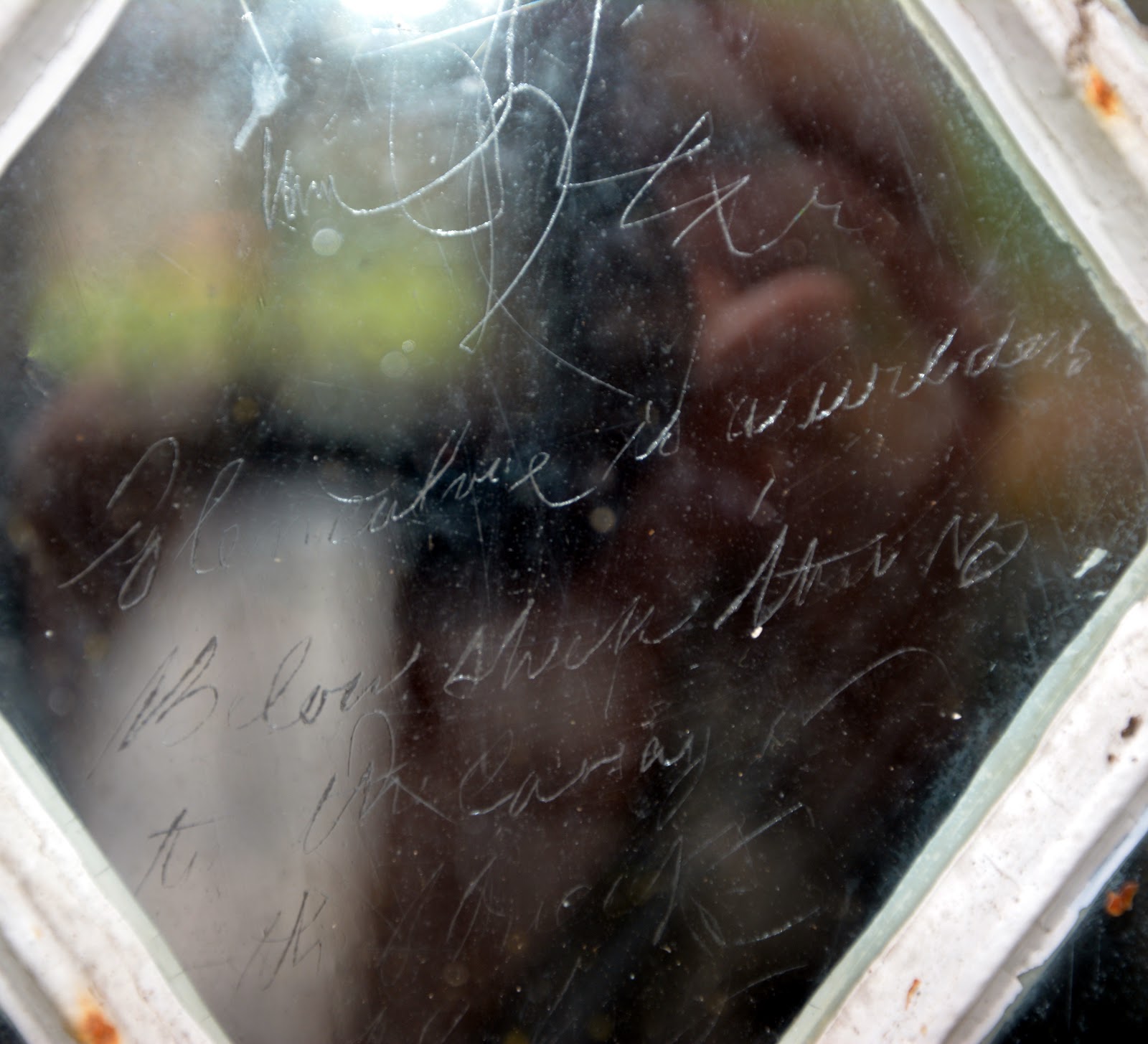
In 1845 ninety people were cleared from Glencalvie, and with nowhere to go, they took refuge in impoverished shelters in the grounds of Croick church where they recorded their plight in scratchy writing on the windows. Like Culloden there is an eerie felling hanging heavy in the air, particularly as I visited alone in the perfect silence of this little glen.

Further food followed in the evening, the highlight of which was a magnificent beef wellington before I once again climbed the stairs to ponder where my salmon catching skills had failed me during the day. Was it the beer on arrival that had been key to my early success? Worth another try I suppose.

The following day, the river had risen a few inches, temperatures were good and fish were reported to be running the river. Early morning found us on the river where I saw two fish move in fast water before I hooked my second fish, a bright bar of silver that my host put at around eight pound but I had at nearer twenty. Further fish jumped, I had another touch later on and three other fish were caught by our party before I had to depart for my evening flight back to Bristol, where I drew admiring glances from some of Stelios’s tangerine clad crew (particularly Nigel) at what they were not to know was a black pudding in my pocket.